
The ITAM Framework Explained: How Indian Enterprises Should Manage IT Assets End-to-End
Team Blue Monk · 6 October 2026
Managing enterprise IT assets gets complicated quickly.
Managing enterprise IT assets gets complicated quickly.
A laptop may begin with procurement, move to an employee, change departments, require repairs, get reassigned and eventually reach retirement. Multiply that journey across hundreds or thousands of assets, offices and employees, and spreadsheets alone are rarely enough.
This is where an ITAM framework for enterprises in India becomes useful.
IT Asset Management, or ITAM, provides a structured way to know what technology an organisation owns, where it is, who is using it, what it costs and what should happen to it next.
What Is an ITAM Framework?
An ITAM framework is a structured approach for managing IT assets throughout their lifecycle.
It combines asset records, processes, ownership and decision-making into one system.
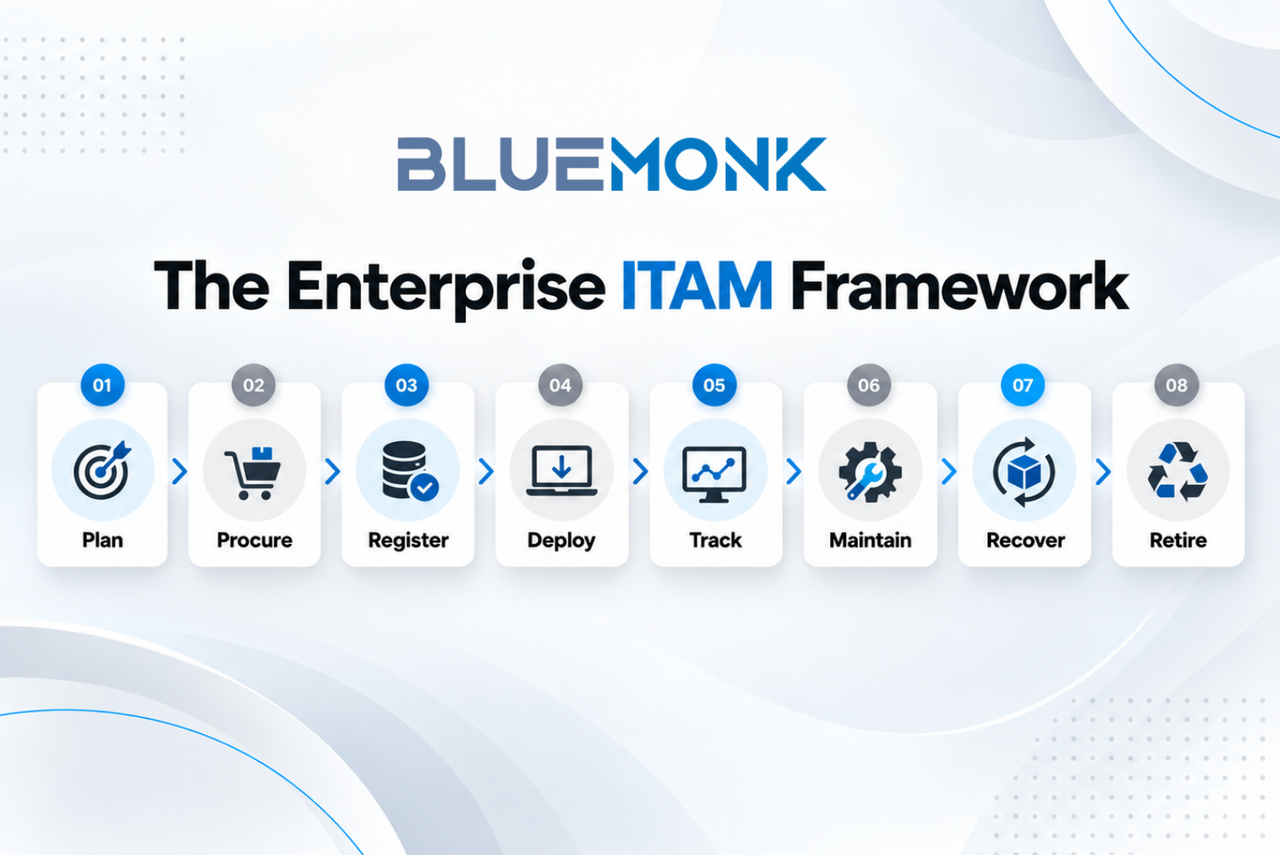
A practical ITAM framework usually covers:
Plan → Procure → Register → Deploy → Track → Maintain → Recover → Retire
The aim is not simply to create an inventory.
A good framework should help teams make better decisions about how technology is purchased, used, maintained and eventually removed from the organisation.
Why Indian Enterprises Need a Structured ITAM Framework
Enterprise technology is increasingly distributed.
Devices may be spread across corporate offices, branch locations, remote employees, warehouses and other operating sites. Assets also move frequently as employees join, leave or change roles.
Without a clear enterprise IT asset management process, organisations can easily lose visibility.
Common problems include:
- Duplicate or outdated asset records
- Devices assigned to the wrong users
- Unreturned employee laptops
- Missed warranty periods
- Unplanned replacement costs
- Equipment sitting unused in storage
- Poor visibility at asset retirement
An ITAM framework creates clear checkpoints across the asset journey.
The Core Stages of an Enterprise ITAM Framework
1. Plan and Procure
ITAM starts before a purchase order is raised.
Teams should first understand what technology is required, who needs it and whether existing assets can meet the requirement.
This stage includes:
- Demand planning
- Device specifications
- Vendor selection
- Budget approval
- Warranty planning
- Purchase documentation
Good procurement decisions reduce problems later in the lifecycle.
2. Register Every Asset
Once equipment enters the organisation, it should become part of the asset register.
Important information may include:
- Asset ID
- Serial number
- Device type
- Purchase date
- Cost
- Warranty
- Location
- Assigned employee
- Current status
This creates a reliable starting point for IT asset tracking.
If asset information is incomplete from day one, maintaining accurate records later becomes much harder.
3. Deploy and Assign
Before equipment is handed to employees, organisations need a clear deployment process.
Devices may require security configuration, software installation, asset tagging and user assignment.
The asset register should also be updated whenever a device moves between users or locations.
This sounds simple, but it is one of the most common places where IT records become inaccurate.
4. Track and Maintain
Once an asset is in use, ITAM becomes an ongoing activity.
Teams should track:
- Current user
- Location
- Repair history
- Warranty status
- Hardware upgrades
- Software requirements
- Asset condition
Good records make maintenance decisions easier.
For example, teams can identify whether repeated repair costs justify replacing an asset or whether a simple upgrade could extend its useful life.
Asset Recovery Should Be Part of ITAM
ITAM should also cover what happens when an employee leaves or no longer requires a device.
Assets should be collected, inspected and reconciled against existing records.
From there, a device might be:
- Reassigned
- Stored
- Repaired
- Refurbished
- Prepared for retirement
Without an organised recovery process, enterprises can lose both physical assets and valuable information about them.
Retirement Is the Final Stage of the ITAM Framework
Eventually, IT assets reach the end of their internal useful life.
But retirement should not mean simply removing equipment from an asset register.
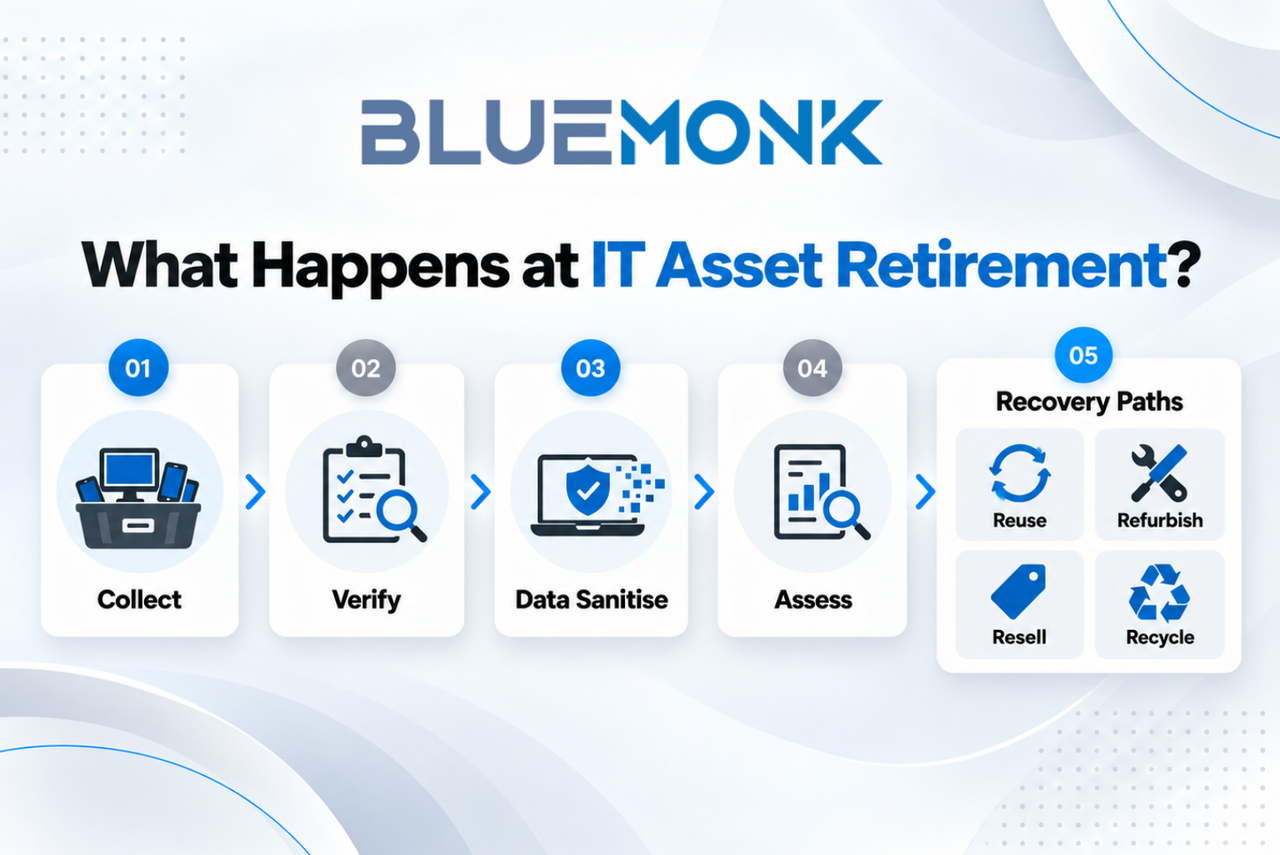
A structured retirement process can include:
Collect → Verify → Sanitise → Assess → Reuse / Refurbish / Resell / Recycle
This is where ITAM connects closely with IT asset disposition and technology retirement.
Retired laptops, storage devices and servers may still contain sensitive company information. They may also retain residual financial value.
Enterprises therefore need visibility over both data sanitisation and the final destination of each asset.
What Information Should an ITAM System Track?
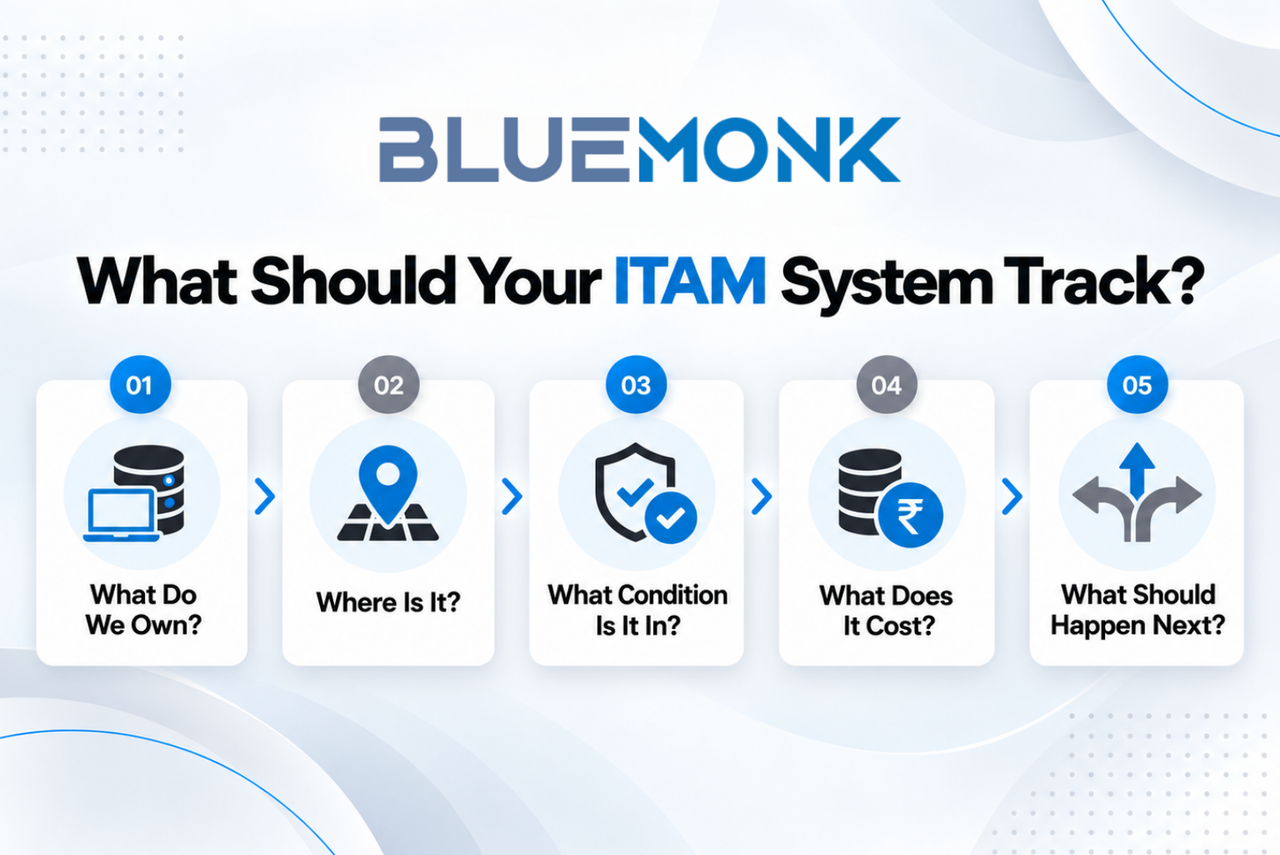
The exact information will vary by organisation, but an effective ITAM system should answer a few basic questions.
What Do We Own?
Teams should have an accurate view of hardware across the organisation.
Where Is It?
Each asset should have a known location or assigned user.
What Condition Is It In?
The organisation should know whether an asset is active, under repair, stored or ready for retirement.
What Does It Cost?
Purchase price alone does not show the full cost of an asset. Maintenance, upgrades and repairs also matter.
What Should Happen Next?
ITAM data should help teams decide whether an asset should remain in use, be upgraded, reassigned or retired.
ITAM Framework vs IT Lifecycle Management
The two concepts overlap, but there is a useful distinction.
ITAM Focuses on Control
IT Asset Management focuses on maintaining accurate records, ownership, status and governance around technology assets.
Lifecycle Management Focuses on the Journey
IT lifecycle management looks at how an asset moves from sourcing through deployment, maintenance and retirement.
In practice, enterprises need both.
The ITAM framework provides the information and controls needed to manage the wider technology lifecycle effectively.
Key Benefits of a Strong ITAM Framework
Better Asset Visibility
Teams gain a clearer picture of devices across employees and locations.
More Controlled IT Spending
Knowing what assets already exist can prevent unnecessary purchasing and improve replacement planning.
Improved Security
Asset records make it easier to identify equipment that needs to be returned, sanitised or retired securely.
Better Asset Utilisation
Unused devices can be identified and reassigned instead of remaining in storage.
Stronger Retirement Processes
Enterprises can maintain better records around collection, sanitisation, reuse, value recovery and recycling.
Building an Effective ITAM Framework in India
There is no single framework that works for every organisation.
However, enterprises can start with a few practical principles.
Create One Source of Truth
Avoid maintaining conflicting asset information across multiple disconnected spreadsheets.
Define Ownership
Make it clear which teams are responsible for purchasing, recording, updating and retiring assets.
Update Records When Assets Move
Asset information should change whenever a device changes user, department or location.
Connect ITAM With Employee Offboarding
Asset recovery should be part of the employee exit process.
Define Retirement Rules
Decide how assets will be assessed, sanitised, reused, refurbished, resold or recycled.
Review ITAM Data Regularly
An asset register is useful only if the information inside it remains accurate.
Final Thoughts
A strong ITAM framework gives enterprises control over technology throughout its working life.
It connects procurement, asset registration, deployment, maintenance, recovery and retirement instead of allowing each stage to operate separately.
For Indian enterprises managing large and distributed technology estates, this end-to-end visibility can improve cost control, asset utilisation, security and retirement planning.
The goal is not simply to know how many devices the organisation owns.
It is to know where every asset is, what condition it is in and what should happen to it next.
Frequently Asked Questions
What is an ITAM framework?
An ITAM framework is a structured system for managing IT assets across procurement, registration, deployment, maintenance, recovery and retirement.
What does ITAM stand for?
ITAM stands for IT Asset Management. It covers the processes used to track, manage and control technology assets throughout their useful life.
Why is ITAM important for Indian enterprises?
ITAM helps enterprises manage assets spread across employees, offices and locations while improving visibility, cost control, security and technology planning.
What are the main stages of ITAM?
Typical stages include planning, procurement, asset registration, deployment, tracking, maintenance, recovery and retirement.
What is the difference between ITAM and IT lifecycle management?
ITAM focuses primarily on asset records, ownership and control. IT lifecycle management focuses on how technology moves through sourcing, use, maintenance and retirement. The two work closely together.
What happens to assets at the end of the ITAM lifecycle?
Assets are collected and verified before being assessed for reuse, refurbishment, resale or recycling. Devices containing company data should also go through an appropriate data sanitisation process.